Agentic AI is emerging as a paradigm for next‑generation smart grids, enabling autonomous decision‑making, adaptive coordination and resilient control in complex energy systems. Agentic AI refers to AI systems composed of one or more AI agents – (semi‑)autonomous software entities that apply AI techniques to perceive, decide, and act in pursuit of defined goals across digital or physical environments such as intelligent assets and advanced robots. While agentic AI often builds on predictive and generative models, it is fundamentally distinguished by its ability to independently execute actions rather than only providing recommendations or content. AI Agents represent a fundamentally new software paradigm — one that holds the promise of automation in ways not always possible earlier. As electricity distribution systems become more dynamic due to electrification, DER integration, EV charging, bidirectional flows and increasing operational complexity, Agentic AI has the potential to shift the electricity system from predominantly human‑orchestrated to (semi‑)autonomous operation, reshaping how control, coordination and resilience are organised, while introducing new challenges around governance, security and safe grid operation.
Highlights
- Gartner forecasts that by 2028, 15% of day-to-day work decisions will be made autonomously through agentic AI and 33% of enterprise software applications will include agentic AI, up from less than 1% in 2024. At the same time, most organisations are still in the pilot or early scaling phase².
- For DSOs, the regulatory relevance is high: under the EU AI Act, AI systems used in the management and operation of the supply of electricity can qualify as high-risk AI systems.
- Agentic AI is emerging as both a critical driver of increased power grid demand and a key technological solution to manage that very surge.
Challenges and opportunities for DSOs
Opportunities
- Enhance workforce productivity and move from task automation to workflow orchestration. Agentic AI can help DSOs automate repetitive tasks and support employees with better context enabling faster end‑to‑end execution, especially in dynamic processes where traditional automation fails to handle exceptions and variability.
- Transform how DSOs organise work and allocate decision rights. As agentic AI matures, it can support a shift from human-led task execution to human-supervised, AI-orchestrated execution, changing how work is distributed between people and AI across the organisation.
- Improve decision velocity and operational responsiveness. In increasingly dynamic distribution systems, agentic AI can shorten the path from signal to action by linking data, reasoning and workflow execution across functions.
- Enable new forms of value creation for DSOs. Beyond productivity gains, agentic AI may help DSOs deliver more proactive, resilient and scalable services, for example through better coordination of outage response, maintenance, compliance, engineering support and customer interaction.
Challenges
- Governance and accountability: The increasing autonomy of Agentic AI introduces fundamental governance and accountability challenges, where ensuring that humans remain accountable for outcomes in line with regulatory and safety obligations is crucial.
- Trust, safety and reliability: Ensuring predictable and safe behaviour becomes critical as agentic AI may influence operational decisions or interact with systems of record and control.
- Data, security and access control: Agentic AI relies on trusted, interoperable data across IT and OT environments, while cybersecurity, identity and access management become more complex when AI systems can initiate actions autonomously.
- Operational readiness: scaling agentic AI requires redesigned workflows, monitoring and clear human-agent operating models.
- System‑level impacts of AI growth: The rapid expansion of AI infrastructure, especially data centres, can increase local network constraints, planning uncertainty and pressure on grid reliability.
E.DSO considerations
- DSOs should recognise that agentic AI is still at an early and experimental maturity stage. While the technology shows strong potential, most solutions are not yet sufficiently mature, reliable and robust for complex, critical enterprise use cases or decision-making.
- In the near term, the focus should be on experimentation and supervised deployment in low‑risk domains, rather than large‑scale or mission‑critical deployment.
- DSOs should evaluate where agentic AI over time has the potential to enable a broader shift towards more autonomous operations and business models.
- For any agentic AI use case – especially when connected to the management and operation of the electricity system – DSOs should evaluate whether the solution may fall under high-risk AI obligations, and should design for human oversight, robustness, cybersecurity, and traceability from the start.
- DSOs should prioritise the creation of a trusted data foundation across IT and OT, with clear governance, role-based access and traceability.
- Agentic AI requires DSOs to build the skills, governance and organisational capabilities needed to redesign processes, manage human-agent collaboration, and maintain clear accountability as digital workers become part of execution.
- DSOs should define clear boundaries for agent decision-making through graduated autonomy levels, with appropriate human oversight triggers.
- DSOs should consider the energy use, carbon footprint and wider grid impacts associated with agentic AI.
Potential use cases
- Cybersecurity automation and response coordination: Continuously correlate security signals across IT and OT environments and autonomously initiate pre‑authorised containment or investigation actions.
- Semi‑autonomous grid operation and control: AI agents continuously coordinate grid configuration and operational measures across the network, operating autonomously within system‑level policies and safety constraints.
- Self‑healing grid orchestration: Distributed AI agents detect disturbances, coordinate corrective actions across grid zones and stabilise the system autonomously, with humans supervising exceptions.
- Flexibility orchestration at system level: AI agents independently identify, negotiate, activate and release flexibility across assets, customers and markets to maintain system balance in near real time.
- Market coordination: AI agents act on behalf of DSOs in real‑time interactions with markets, aggregators and other system actors to align grid constraints and market behaviour
- Incident and outage management: Autonomously detect incidents, assess grid impact and coordinate predefined response actions across grid operations.
- Field service and maintenance orchestration: Autonomously prioritise and coordinate maintenance actions using asset condition, history, work management data and crew availability.
- Internal operations and corporate workflows: Act as autonomous digital workers for internal, non‑grid‑critical processes such as HR onboarding, procurement coordination, finance reconciliation, regulatory and compliance workflows.
- Software engineering: Act as autonomous participants that plan, code, test and debug software across the development lifecycle, while human engineers supervise, review decisions and handle exceptions.
- Grid development: AI agents continuously evaluate and adjust long‑term grid development strategies by autonomously balancing reinforcement, flexibility and operational measures.
Ongoing projects
At the time of writing, the Technology Radar Task Force is not aware of any ongoing project on Agentic AI.
| Success case number | Title | Company |
| 39.2025 | Self Healing Systems | Avacon |
Impact on the energy system
Potentially shifts the electricity system from human orchestrated to (semi‑)autonomous operation, increasing adaptiveness and resilience while introducing new challenges around control, security and safe grid operation.
Time to scale
5 – 10+ years (depending on use case criticality).
Link to relevant EU policies
Digitalisation, Data sharing, Cybersecurity, Flexibility, Resilience, EU AI act.
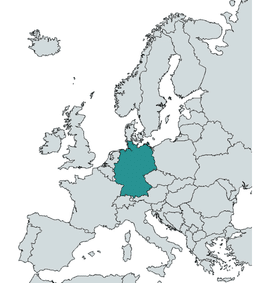
Technology deployment across countries with E.DSO members
Last update: 12 September 2026