Predictive AI is a type of artificial intelligence that focuses on forecasting, prediction and decision support based on historical and real‑time data. The main subcategories of predictive AI models are supervised and unsupervised learning, time‑series models, reinforcement learning, and mathematical optimisation. In practice, it is often implemented through hybrid models that combine several approaches to improve robustness, performance, and decision‑making quality. AI performance is based on the combination of the availability of a large amount of data, large computing capacity, and machine learning algorithms. As distribution networks are generating a growing amount of data, due to the deployment of smart meters and increased measurement and communication capabilities, DSOs have early on considered AI solutions.
Highlights
For the European Parliament, artificial intelligence represents any tool used by a machine to “reproduce human-related behaviours, such as reasoning, planning and creativity”. The AI Act is a proposed European law on artificial intelligence – the first law on AI by a major regulator anywhere. The law assigns applications of AI to three risk categories. First, applications and systems that create an unacceptable risk are banned. Second, high-risk applications are subject to specific legal requirements. Lastly, applications not explicitly banned or listed as high-risk are largely left unregulated.
Challenges and opportunities for DSOs
Opportunities
- Enhance demand/supply forecasting and decision making adjust distribution, increasing flexibility and minimising the risk of blackouts.
- Supports DSOs to integrate (distributed) renewable energy sources into the grid.
- Reduce the risk of grid failures by performing timely maintenance by using intelligent, predictive algorithms detecting anomalies in the grid.
- Enhance productivity of employees by automating & augmenting repetitive and data intensive tasks.
Challenges
- Data Privacy. Handling sensitive grid data while maintaining privacy is essential.
- Cybersecurity. Protecting AI systems from cyber threats is critical to ensure grid reliability.
- Data quality. AI relies on high-quality training and input data (e.g. grid data).
- Integrating AI into distribution grids involves managing distributed energy resources (DERs), ensuring seamless coordination and optimisation is a challenge for DSOs.
E.DSO considerations
- Although it is integrated into this technology radar, predictive AI is considered a mature tool that is already delivering value for DSOs and therefore represents a “here and now” priority rather than an emerging technology.
- The performance of AI solutions is directly based on data availability and quality and emphasized data privacy concerns.
- Facilitating and accelerating the industrialisation of AI solutions into core information systems has now become one of the major challenges of industrial AI.
- AI algorithm performance control requires special attention and dedicated monitoring tools.
- AI technologies require specific skills and companies that integrate them have to develop specific training programs.
- Development and implementation of AI solutions must be carried out with the aim of reducing carbon footprint.
- Particular attention must be paid to the ethical aspect of AI (potential concerns about justice, fairness, accountability etc. …).
- European legal texts under preparation must account for the specificities of DSOs.
Potential use cases
- Production and Demand forecast: AI combined with classical solutions may improve forecast quality.
- Congestion management prediction: determining how much flexibility is needed in the future.
- Distributed Energy Resources (DER)/Flexibility: AI allows to handle the increasing complexity of network control due to DER variability. E.g. determining the available power for charge point providers.
- Network development studies: AI enables the realisation of network development studies accounting for technical constraints, and technological and sociological hypotheses.
- Asset management: AI performances in image processing allow automatic diagnosis to enhance programmed renovation. The learning capacity of AI allows, in some cases, to perform predictive maintenance.
- Image recognition: e.g. electricity energy meter & components recognition from meter photos, detecting assets on technical drawings.
- Operation and employee support: AI could augment the capabilities of maintenance technicians, customer advisors and support function employees.
- Network control & outage prediction: AI could augment the capabilities of control rooms (fault location, DER integration). AI solutions will enable precise LV massive control.
Ongoing projects
UFD:
- UFD is leveraging artificial intelligence to transform the inspection of overhead high- and medium-voltage lines through its DALI project. The initiative combines high-productivity drone operations, including BVLOS flights, with advanced AI-based image analysis to digitalise and automate the inspection process. DALI enables large-scale and systematic monitoring of the network, already reaching 5,000 km inspected in 2023 and 11,000 km in 2024. The solution processes large volumes of data, supported by AI models trained with over 20,000 km of inspection images, allowing automated detection, classification and prioritisation of defects.
This approach replaces manual and heterogeneous inspections with a standardised, scalable and cost-efficient model, significantly improving data quality, asset visibility and operational efficiency, while supporting vegetation management and regulatory inspections. Beyond inspection, DALI provides a key digital foundation for advanced capabilities such as digital twins, predictive asset management and risk-based maintenance, positioning UFD at the forefront of data-driven grid operation.
ESO:
- Mass outage prediction tool – A machine learning-based system was created to provide alerts (predicts number of outages per region) for potential large-scale mass power outages in the 10 kV overhead line (OHL) networks. The tool considers weather forecasts, historical ESO outage data, and technical network parameters to enhance its predictive capabilities.
- Contractor documentation quality assessment tool – A machine learning-driven model has been developed for assessing the quality of network documentation. This model categorises contractor-provided documentation as either “acceptable” or “not acceptable”, pinpointing the specific document page and identifying the type of error present. These errors may include inaccuracies in electrical addresses, rates, lengths, diagrams, or overall document composition. The system then takes corrective actions, such as updating the records or notifying relevant employees, as needed.
- DMS grid fault classification tool – The tool utilises Natural Language Processing (NLP) models to classify the nature of grid element faults based on engineer-provided fault description text. The outcomes generated by these models are employed for cross-referencing with the failure causes inputted by engineers to identify potential human errors in the process.
| Success case number | Title | Company |
| 17.2025 | AI powered Fraud Detection | UFD |
| 18.2025 | ARIIA | Enedis |
| 22.2025 | Detection of Non-Technical Losses | Enedis |
| 25.2025 | Feeder Load Estimation | ČEZ Distribuce |
| 36.2025 | PRoDiGE | Enedis |
| 2.2024 | Analytics4Vegetation | E-REDES |
| 7.2024 | DORA | Enedis |
| 10.2024 | GridWise | E-REDES |
| 21.2024 | PQsmart | Netz Niederösterreich |
| 23.2024 | Smart Cable Guard | Alliander |
Impact on the energy system
High impacts on forecasts (network planning, congestion management, demand forecasting) leading to improved energy efficiency and DER integration).
Time to scale
0-5 years.
Link to relevant EU policies
Digitalisation, Data sharing, Cybersecurity (NIS2), Flexibility, EU AI act.
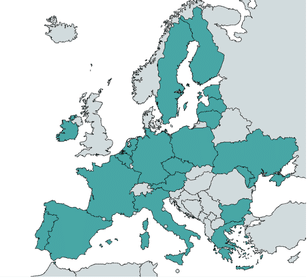
Technology deployment across countries with E.DSO members
Last update: 12 September 2026